
Adding an EV Charger in Belmont: What Your Switchboard Needs First
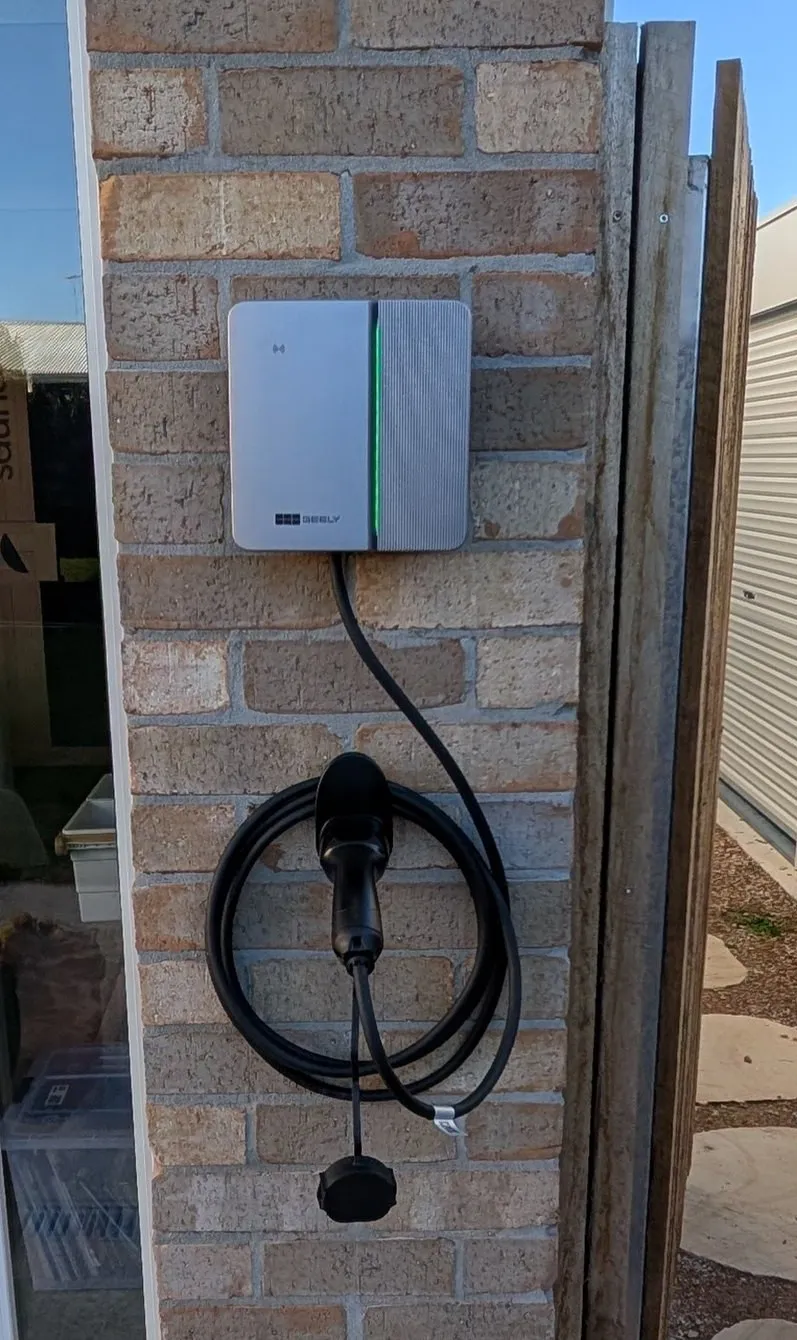
There are noticeably more electric cars around Belmont than there were two years ago — particularly along the Barwon Heads Road corridor and through the newer estates at the southern end of the suburb. Most people start the same way: charging off a standard power point with the cable that came in the boot, and quickly deciding there has to be a better option.
There is. But before anyone talks to you about charger brands, there’s a more basic question that decides how the whole job goes.
Can your switchboard actually handle it?
Why an EV charger isn’t like other appliances
A kettle draws a lot of power for two minutes. A home EV charger draws a lot of power for six or eight hours straight, usually overnight, often while the dishwasher and the air conditioning are also running.
That sustained draw is what makes it different. Your home has a fixed amount of supply coming in from the street, and everything in the house shares it. Add a charger without accounting for that and you’re not just risking a tripped main — you’re loading a system beyond what it was designed for.
This is where load management comes in. A properly set up charger can monitor what the rest of the house is using and throttle itself back when demand is high, then ramp up again once things quieten down. Your car still charges overnight. Nothing trips. You don’t notice it happening.
It’s the single most important part of the installation and the part cheap quotes tend to skip.
Single-phase or three-phase — and does it matter?
Most Belmont homes are single-phase, which is the standard domestic supply. Some larger or newer properties have three-phase, which brings in more capacity.
For the vast majority of people, single-phase is completely fine. A typical single-phase home charger will add a useful amount of range overnight — far more than most people drive in a day. If your car sits in the driveway from six in the evening until seven the next morning, you have more charging hours than you need.
Three-phase charges faster, and there are households it genuinely suits: two EVs, a work vehicle that needs turning around quickly, or a home that already has three-phase for other reasons.
But upgrading a single-phase home to three-phase purely to charge faster is usually money badly spent. If you’re only driving to Waurn Ponds and back, you’ll never use the extra speed. I’d rather tell you that upfront than sell you a bigger job.
What a compliant installation actually includes
An EV charger is not a plug-in appliance. It’s a piece of fixed wiring, and in Victoria that means a licensed electrician and a paper trail.
A proper install includes:
- An assessment of your existing switchboard and available capacity before anything is quoted
- A dedicated circuit back to the board — not shared with anything else
- Correctly sized cable for the run, which matters more than people expect when the board is at the front of the house and the car parks at the back
- RCD protection appropriate to EV charging
- Load management configured to suit your actual supply
- A Certificate of Electrical Safety on completion
If a quote comes in dramatically below the others, it’s worth asking which of those it leaves out. It’s usually the switchboard assessment, and that’s the one that causes problems later.
The older-home complication
Here’s where a lot of Belmont installs get interesting.
If you’re in one of the post-war weatherboards or brick veneers this suburb is full of, there’s a decent chance your board is full, or still running ceramic fuses and no safety switches. You can’t run a new dedicated circuit into a board with no spare ways, and you shouldn’t hang a modern continuous load off ageing infrastructure.
In that situation the charger is the second job, not the first.
That’s not an upsell — it’s the order the work has to happen in. The good news is that a switchboard upgrade you were probably going to need anyway gets done properly, and the charger install afterwards is straightforward. Do it the other way round and you pay twice.
If you’re planning solar or a battery as well, get all of it assessed together. It’s one conversation and one set of decisions, rather than three separate visits discovering the same constraint each time.
Where to start
The honest first step is someone looking in your meter box and at where the car parks. Ten minutes tells you whether this is a simple job or a two-stage one, and you can plan properly from there.
As an electrician here in Belmont, I’m not adding travel time to get to you, and there’s no surcharge for coming out. Have a look at our EV charger installation service, or call 0433 444 331 and I’ll come and take a look.