
Still Got Ceramic Fuses? What Belmont's Older Homes Need to Know
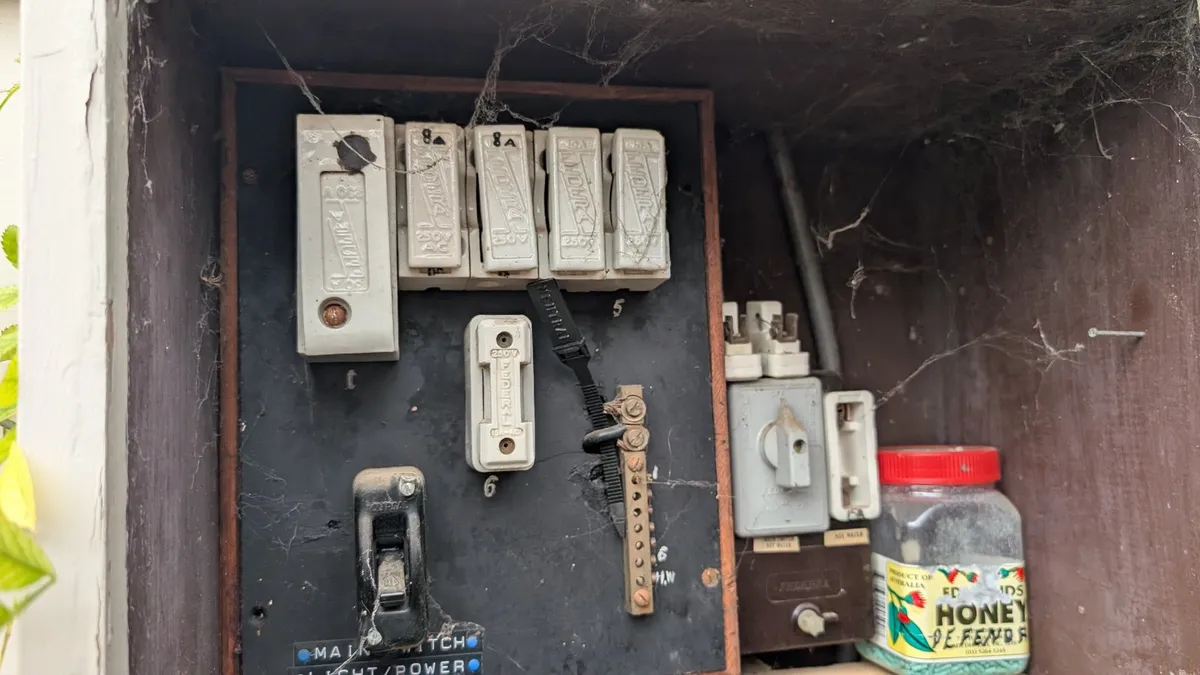
Belmont’s housing tells a story if you know where to look. Walk the streets off Thomson Road and Roslyn Road, or the pockets tucked behind the High Street shops, and you’ll find solid post-war weatherboards and brick veneers that have been good homes for seventy years and will be good for seventy more.
A lot of them are still running the switchboard they were built with.
That board was designed for a house with a few lights, a radio, and maybe an electric kettle. Today it’s asked to run an induction cooktop, two air conditioners, a dishwasher, a home office — and increasingly, a car in the driveway waiting to be charged.
Here’s how to work out what you’ve actually got, and whether it needs doing anything about.
What’s actually in your meter box?
Open the door and you’ll see one of three generations of technology. Most older Belmont homes have a mix.
- Ceramic fuses. Small white or brown porcelain holders you physically pull out. Inside is a strand of fuse wire that melts when the circuit is overloaded. If you’ve ever rewired one of these by torchlight, your board predates modern safety standards by a considerable margin.
- Circuit breakers. Small switches in a row that flick down when a circuit is overloaded. Better than fuses — they reset instead of needing rewiring — but they protect the cable, not you.
- Safety switches (RCDs). These look like circuit breakers but have a TEST button on the front. They’re the ones that protect people, and they work on a completely different principle. I’ve written about safety switches and what they actually do in more detail.
The important thing to understand: fuses and circuit breakers were never designed to save your life. They stop cables overheating and starting a fire, which matters enormously — but if you touch a live wire, only a safety switch will help you.
Plenty of Belmont homes have one safety switch covering a single circuit, or none at all. Ideally every power and lighting circuit is protected.
Why the age of the house matters more than the age of the board
A board full of ceramic fuses isn’t automatically dangerous. Fuses do their job. The problem is what’s happened around them over seventy years.
The wiring behind the board has aged too. Older rubber and early PVC insulation goes brittle. It cracks when disturbed, and the places it gets disturbed are ceilings and wall cavities where you’d never see it.
The load has multiplied. A post-war house was wired for a handful of circuits. Every renovation since has added more — a new kitchen, a rear extension, a studio out the back — and each one puts more demand on a board that has run out of room.
The board is often full. This is the one that catches people out. You can’t add a circuit for an air conditioner, a new kitchen or an EV charger if there’s no space left, which turns a straightforward job into a bigger one.
What an upgrade actually involves
Less disruption than most people expect. A typical domestic upgrade is a half-day to a full day’s work, with power off only during the change-over itself.
You get a new compliant enclosure and main switch, RCD safety switches across your power and lighting circuits, modern circuit breakers replacing the old fuses, every circuit neatly re-terminated and clearly labelled, and a Certificate of Electrical Safety when it’s done.
On cost, I’ve set out the full picture in the switchboard upgrade guide — including what pushes a job toward the upper end of the range.
When it’s urgent, and when it can wait
I’d rather tell you honestly than sell you something you don’t need.
Stop using the affected circuit and call someone today if you see:
- Scorch marks, discolouration or melted plastic anywhere on the board
- A burning smell, or a board that’s warm to touch
- Buzzing or crackling from the meter box
- A circuit that trips repeatedly and won’t stay on
Worth planning for, but not an emergency:
- A board that’s full, with no spare ways
- Ceramic fuses that are working fine but leave you with no RCD protection
- A renovation, solar install or EV charger coming up — get the board sorted first, because it’ll need doing anyway
- A rental property due for its two-yearly electrical safety check — a board without working safety switches won’t pass
And genuinely fine to leave alone: a modern board with RCDs on every circuit, no faults, and room to spare. If that’s what you’ve got, you don’t need me.
Getting it looked at
If you’re not sure which category your board falls into, that’s an easy thing to settle. As your local Belmont electrician, I’m usually only a few minutes away — no travel surcharge, and often same day for anything urgent.
Take a look at our switchboard upgrade service, or just call 0433 444 331 and describe what you’re seeing. If it can wait, I’ll tell you it can wait.